
Broken Arrow Motorcycle Accident Attorney
Broken Arrow, OK, is a flourishing suburb of the greater Tulsa area, positioned between Wagoner County and Tulsa County. As of 2024, the population of this small-town feeling city was surpassing 113,000 residents. It is home to the Broken Arrow Expressway (SH-51) as well as Highway 169 and the Creek Turnpike. With big open highways as well as the scenic Route 66 in such proximity, it’s no wonder so many motorcyclists ride in Broken Arrow, OK. The city may have the 4th largest population by city in the state, but it still holds that small-town feel. Motorcyclists traversing these heavy traffic areas are faced with constant hazards that range from, poor or hazardous road conditions, irregular traffic patterns and even negligent drivers. Whether it’s a driver failing to yield at an intersection on E. Kenosha St. or making an abrupt lane change on a highway, motorcycle accidents in Oklahoma frequently lead to severe injuries with lasting effects.
At Hawkins Felton, we recognize the unique dangers motorcyclists encounter on the road and pursue justice for those harmed by negligent drivers. At Hawkins Felton, we conduct a thorough investigation into every motorcycle accident case, collecting essential evidence such as traffic camera footage, eyewitness statements, and accident reconstruction reports. We collaborate with medical experts to document the full extent of your injuries and long-term care needs as we pursue fair compensation. With a 24/7 intake line, a no-win, no-fee policy, and decades of experience, we are ready to advocate for you. Contact us today at (918) 583-6007 to learn how Phillip Hawkins can fight for you.
Common Motorcycle Accident Cases Handled by a Broken Arrow Motorcycle Accident Attorney
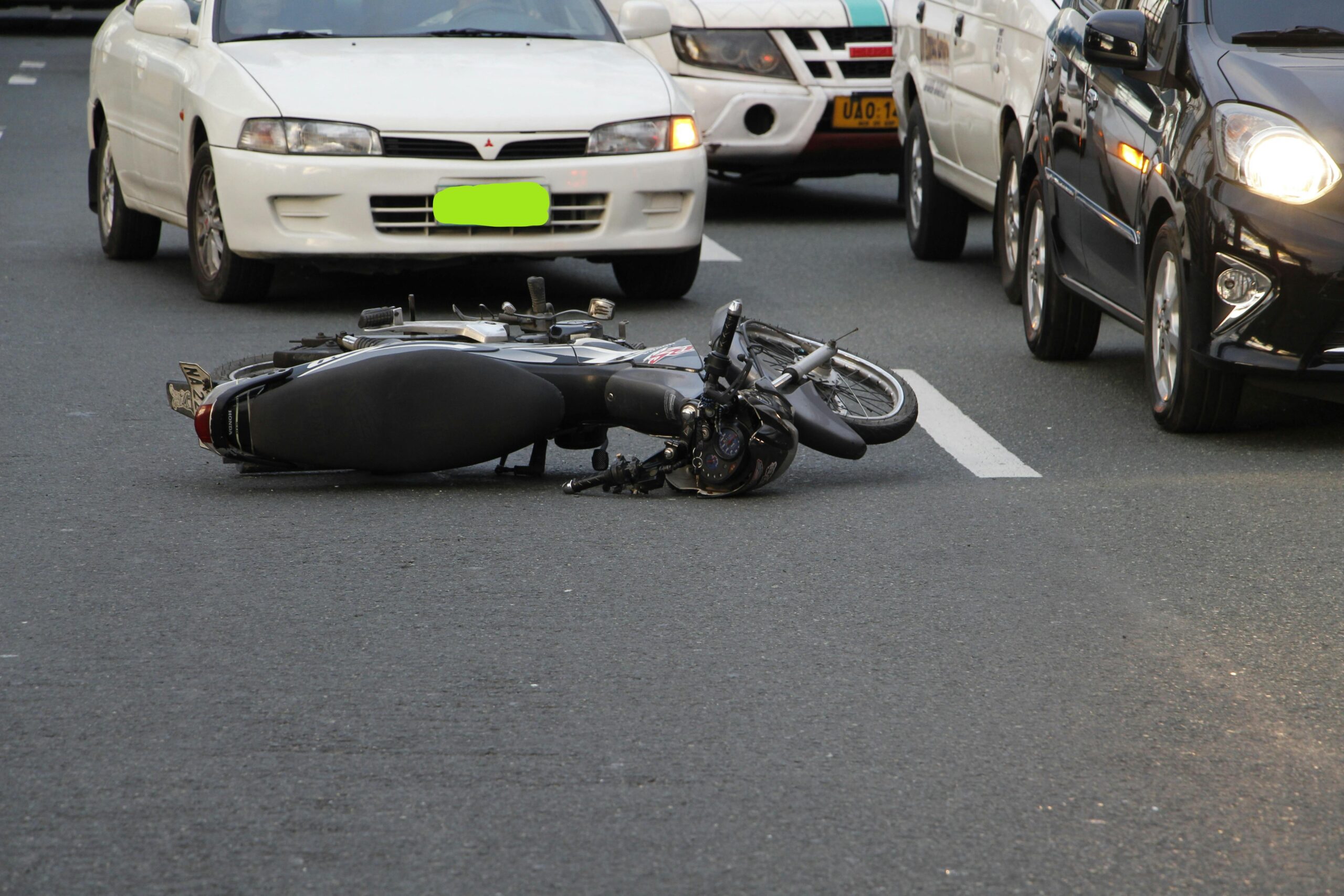
Motorcycle accidents can occur in a variety of ways, understanding common types of motorcycle accidents in the greater Tulsa area can help riders both stay attentive and take any necessary precautions. Motorcycle accidents in Broken Arrow and the greater Tulsa area often result in devastating injuries due to the lack of structural protection for riders.
Even at low speeds, collisions can cause severe trauma. Given the unique risks motorcyclists face, it’s important to understand the most common types of accidents and the legal challenges involved in each. Having proper gear and knowledge of the road may not always be enough to prevent an accident, as negligent drivers can be the most dangerous risk for motorcycle riders. Below are some of the common types of accidents we handle at Hawkins Felton.
Lane-Change Accidents
Lane-change accidents involving motorcycles often occur when a motorist fails to check their blind spots or misjudges the distance and speed of an approaching rider. Because motorcycles are smaller than passenger vehicles, they are frequently overlooked by negligent drivers making abrupt lane changes, especially on high-traffic roads like the Broken Arrow Expressway or the Creek Turnpike. These accidents can result in catastrophic injuries such as traumatic brain injuries, spinal cord damage, and severe road rash.
At Hawkins Felton, we aggressively investigate lane-change accidents by gathering surveillance footage, witness statements, and accident reconstruction data to prove driver negligence. If you or a loved one has been injured in a lane-change accident, do not wait to seek legal counsel. Our firm is dedicated to pursuing claims against negligent drivers and seeking compensation for medical expenses, lost wages, and long-term rehabilitation. Contact us today to discuss your case with an experienced Broken Arrow motorcycle accident attorney.
Drunk Driving
Drunk driving remains one of the leading causes of motorcycle accidents in Oklahoma. Impaired drivers exhibit delayed reaction times, poor judgment, and erratic behavior that puts motorcyclists at extreme risk. A motorcyclist struck by a drunk driver may suffer life-altering injuries or worse, fatal consequences. Oklahoma’s DUI laws hold intoxicated drivers accountable, but victims also have the right to pursue civil claims for damages.
At Hawkins Felton, we conduct an in-depth analysis of drunk driving accidents, securing police reports, breathalyzer test results, and witness accounts to build a compelling case. We fight relentlessly to help victims pursue fair compensation, including punitive damages where applicable. If you have been injured in a motorcycle crash involving a drunk driver, we can help you take immediate legal action. Call our office now for a free case evaluation and let us fight for justice.
Speeding
Excessive speed significantly increases the likelihood of motorcycle accidents, as speeding drivers have less time to react to motorcyclists sharing the road. A car traveling at high speeds may be unable to stop in time, leading to devastating rear-end or side-impact collisions. Speed-related motorcycle accidents frequently result in broken bones, internal injuries, and permanent disabilities. Insurance companies may attempt to shift blame onto the motorcyclist, arguing that they were speeding or engaging in reckless riding behaviors. Our firm stands up to these unfair tactics by utilizing crash forensics, traffic camera footage, and expert testimony to establish the true cause of the accident. If a speeding driver caused your crash, do not let the insurance company diminish your claim. Schedule a free consultation with a Broken Arrow motorcycle accident attorney to help protect your rights.
Blind Spot Accidents
Blind spot accidents are among the most frequent and dangerous types of motorcycle crashes, often resulting in severe injuries or fatalities due to the sheer vulnerability of motorcyclists. Unlike passenger vehicles, motorcycles are smaller, more maneuverable, and easily obscured in a driver’s blind spots, particularly when large trucks, SUVs, or commercial vehicles are involved. On Oklahoma’s busy highways, such as Highway 169, the Broken Arrow Expressway, and the Creek Turnpike, blind spot collisions are an ever-present danger. When drivers fail to properly check their mirrors, signal their intentions, or account for surrounding traffic, they can sideswipe a motorcyclist, force them off the road, or cause them to lose control, leading to catastrophic injuries.
One of the primary causes of blind spot accidents is driver negligence, particularly when motorists fail to conduct head checks before merging or changing lanes. Many drivers over-rely on mirrors and neglect to physically turn their heads to check for smaller vehicles, assuming that their mirrors provide a full picture of the road. Distracted driving, such as texting, adjusting the GPS, or engaging in conversations, further increases the likelihood of a driver overlooking a motorcyclist in their blind spot. Truck drivers and commercial vehicle operators pose an even greater risk due to their larger blind zones that can completely conceal a motorcycle from view.
Poor vehicle design and lack of blind spot detection technology can also contribute to these collisions. While some newer vehicles are equipped with blind spot monitoring systems, many cars on the road lack this feature, leaving drivers solely responsible for manually checking for motorcycles before making lane changes. When drivers fail to take this responsibility seriously, motorcyclists suffer the consequences.
Injuries resulting from blind spot accidents are often severe due to the impact’s location and the likelihood of secondary crashes. A motorcyclist clipped by a merging vehicle may be thrown into oncoming traffic, ejected onto hard pavement, or pinned between vehicles. These types of crashes frequently lead to traumatic brain injuries (even with a helmet), spinal cord damage, internal bleeding, fractures, and severe road rash. Victims may require extensive medical treatment, surgeries, rehabilitation, and long-term care, making it essential to seek fair compensation.
Road Hazard Accidents
Motorcyclists face significantly higher risks from road hazards than drivers of passenger vehicles. While a car or truck may absorb the impact of a pothole or debris with minimal consequences, a motorcyclist encountering the same hazard can be thrown from their bike, resulting in catastrophic injuries such as traumatic brain injuries, spinal cord damage, or multiple fractures. These accidents often occur without warning, leaving riders little time to react and avoid serious harm. At Hawkins Felton, we understand the complexities of road hazard cases and aggressively pursue claims to hold the responsible parties accountable.
Poorly Maintained Roadways Increase Risks
One of the most common causes of motorcycle accidents due to road hazards is poorly maintained infrastructure, including potholes, crumbling pavement, and missing or obscured road signs. In Oklahoma, municipal and state agencies are responsible for ensuring that roads are properly maintained and free from dangerous conditions. When a government entity neglects routine maintenance or fails to repair known hazards in a timely manner, they may be liable for injuries resulting from their negligence. However, claims against government agencies are subject to strict legal deadlines and procedural requirements. Under Oklahoma law, injured motorcyclists typically have a limited window to file a claim against a government entity, making it essential to seek legal counsel as soon as possible.
How Construction Zones Increase Statistics for Accidents
Another major hazard for motorcyclists is improperly marked or poorly designed construction zones. In areas undergoing roadwork, uneven pavement transitions, loose gravel, and sudden lane shifts can create deadly conditions for riders. Construction companies and government agencies responsible for roadwork are required to provide clear warning signs, proper detours, and safe transitions between different road surfaces. When they fail to do so, motorcyclists may be caught off guard, leading to severe accidents. Our attorneys and staff thoroughly investigate these cases by examining construction records, road maintenance logs, and contractor agreements to determine liability and hold negligent parties accountable.
Poor roadway design is another overlooked factor in motorcycle accidents. Sharp turns without proper signage, excessive slopes, dangerous intersections, and inadequate drainage systems can all contribute to crashes. If a roadway was inherently unsafe due to design flaws, the government entity responsible for its planning and maintenance may be held liable for any resulting injuries. In these cases, proving negligence requires engineering reports, accident data analysis, and expert testimony, and we work to obtain each of these for our clients.
Because road hazard cases often involve government entities, contractors, and large corporations, these claims require a sophisticated legal strategy. Insurance companies and government agencies will aggressively defend against these claims, arguing that the motorcyclist was at fault or that they had “ample opportunity” to avoid the hazard.
How to Protect Your Rights Following a Motorcycle Accident
Motorcycle accidents can be life-altering, leaving victims with serious injuries, mounting medical bills, and insurance battles that can feel impossible to navigate alone. Knowing what steps to take immediately after an accident can make a significant difference in protecting your legal rights and pursuing fair compensation. Insurance companies often look for ways to minimize their liability, and failing to take the proper actions can give them an opportunity to devalue or deny your claim.
Protecting your rights after a motorcycle accident requires swift action and a strong legal advocate who understands how to build a compelling case. At Hawkins Felton, we are dedicated to helping injured motorcyclists pursue fair compensation. If you or a loved one has been hurt in a crash, do not wait. Call (918) 583-6007 today for a free case evaluation.
Why a Motorcycle Accident Attorney Recommends Seeking Immediate Medical Attention
Motorcycle accidents often result in severe and life-altering injuries, yet many victims make the critical mistake of delaying medical treatment because they do not immediately feel pain or believe their injuries are minor. Unlike car accidents, where occupants are shielded by airbags and seat belts, motorcyclists have little to no protection from the force of impact. Even a seemingly minor crash can cause serious internal damage that may not be apparent right away. At Hawkins Felton, we strongly urge all motorcycle accident victims to seek immediate medical attention, both for their own health and to protect their right to financial compensation.
One of the most dangerous aspects of motorcycle injuries is that some conditions do not produce immediate symptoms. Traumatic brain injuries (TBIs), concussions, internal bleeding, and spinal cord damage can take hours or even days to manifest. Adrenaline and shock often mask pain immediately following an accident, leading victims to believe they are unharmed. However, by the time symptoms appear, such as dizziness, nausea, headaches, or numbness, serious and irreversible damage may have already occurred. Seeking prompt medical care helps doctors find hidden injuries early, which can prevent complications that could become life-threatening if left untreated.
Beyond protecting your health, obtaining immediate medical treatment documents your injuries for a compensation claim. Insurance companies closely examine medical records when evaluating injury claims, and if there is any delay in seeking treatment, they may argue that your injuries were not serious or were unrelated to the accident. A gap between the accident and medical evaluation gives insurers an opportunity to devalue or outright deny your claim, asserting that your injuries were caused by something else or were not severe enough to require immediate care. By seeing a doctor immediately, you create an official medical record linking your injuries directly to the accident, making it significantly harder for insurance adjusters to dispute your claim.
Another key reason to prioritize medical attention is the role that medical documentation plays in determining the full extent of your damages. Motorcycle accident victims often face long-term disabilities, chronic pain, and the need for ongoing rehabilitation, all of which should be documented in a claim for fair compensation. A comprehensive medical evaluation will establish the severity of your injuries, the treatments required, and the anticipated costs of future medical care. These records serve as key evidence in negotiations with insurance companies and, if necessary, in court.
In addition to emergency medical treatment, follow-up care is essential. Many motorcycle accident injuries, such as whiplash or soft tissue damage, can worsen over time if not properly treated. Some injuries require physical therapy, surgery, or long-term pain management, all of which should be thoroughly documented by medical professionals. Failing to attend follow-up appointments can weaken your claim, as insurance companies may argue that you were not truly injured or that your condition was exaggerated. By consistently following medical advice and attending all recommended treatments, you document the ongoing impact of your injuries.
Do Not Wait to Report the Accident to Law Enforcement
Reporting a motorcycle accident to law enforcement is one of the most critical steps you can take after a crash. In Oklahoma, state law requires that any accident resulting in injury, death, or significant property damage be reported to the police immediately. Failing to do so not only jeopardizes your ability to seek compensation but can also create legal complications that may affect your case.
When officers arrive at the scene, they conduct an objective investigation, gathering details that can later play a decisive role in your claim. The police report typically includes the identities of all involved parties, statements from drivers and eyewitnesses, documentation of any traffic violations, and an initial assessment of fault. This report becomes an essential record when dealing with insurance companies, as it provides an unbiased third-party account of what occurred. Without a police report, the at-fault driver may attempt to change their story later, denying responsibility or even blaming you for the accident. Insurance companies will seize on any uncertainty to reduce or deny your claim, making it significantly harder to pursue fair compensation.
A police report also includes key evidence that can help establish negligence. Officers document road conditions, vehicle damage, skid marks, traffic signals, and other environmental factors that may have contributed to the crash. If the other driver was impaired, speeding, or violating traffic laws, the report may indicate whether a citation or arrest was issued, which can be powerful evidence in your case. In hit-and-run accidents, law enforcement involvement is even more important, as police can launch an investigation to identify the fleeing driver and gather surveillance footage from nearby businesses, traffic cameras, or witnesses.
Many motorcycle accident victims make the mistake of assuming that if their injuries seem minor at the time, calling the police is unnecessary. However, injuries such as concussions, whiplash, or internal bleeding may not become apparent until hours or days after the crash. If you later discover that your injuries are more severe than initially thought but failed to report the accident, the insurance company may argue that the crash never happened or that your injuries were caused by something else. A police report creates an official timeline linking your injuries to the accident, eliminating any doubt about their cause.
If, for any reason, law enforcement does not respond to the scene, it is important to file an accident report yourself as soon as possible. In Oklahoma, you can file a report with the local police department or the Oklahoma Department of Public Safety (DPS). Taking this step documents your accident, even if officers were not present at the scene. Our firm can assist you in obtaining and reviewing the official report, flagging any inaccuracies, and using it in your claim against the at-fault driver.
Making Sure to Get Important Information at the Scene if Possible
In the aftermath of a motorcycle accident, the steps you take at the scene can preserve evidence for your personal injury claim. If you are physically able, gathering critical evidence can help establish liability, document the severity of the accident, and protect your right to fair compensation. The minutes immediately following the crash are often the only opportunity to capture undisturbed physical evidence, and taking swift action can prevent insurance companies from disputing fault later on.
One of the most important things you can do is take detailed photographs and videos of the accident scene. Capture multiple angles of the vehicles involved, showing the extent of the damage, skid marks, and the position of the vehicles on the roadway. Pay close attention to road conditions, including potholes, debris, missing traffic signs, or malfunctioning traffic signals, as these factors can contribute to proving negligence. If you have visible injuries, document them as well. Cuts, bruises, road rash, or fractures can provide compelling visual evidence of the severity of your injuries and how the accident impacted you physically.
Beyond visual evidence, securing contact information from all involved parties is essential. Obtain the name, phone number, address, and insurance details of the at-fault driver, as well as the make, model, and license plate number of their vehicle. If the other driver refuses to provide their information or acts aggressively, wait for law enforcement to arrive and handle the exchange. In cases where a commercial truck or company vehicle is involved, collecting information about the employer, vehicle registration, and trucking company is important, as additional parties may be held liable.
Witness statements can also serve as powerful evidence in your case. If bystanders or nearby drivers saw the accident occur, ask for their names and phone numbers so they can provide testimony later. Independent witness statements can counter the at-fault driver’s version of events, especially if they try to shift blame onto you. Many motorcycle accidents involve negligent drivers who claim they “did not see the rider,” but eyewitness accounts can help disprove these defenses.
If your injuries prevent you from gathering evidence, do not panic, our attorneys and staff at Hawkins Felton will step in and conduct a comprehensive investigation on your behalf. We work with accident reconstruction experts, obtain traffic camera or surveillance footage, and review police reports to uncover all available evidence. If the accident occurred in a construction zone or on a dangerous roadway, we will investigate whether government agencies, contractors, or third parties may share liability.
Why a Broken Arrow Motorcycle Accident Attorney Warns Against Talking to Insurance Adjusters
After a motorcycle accident, you may receive a call from the at-fault driver’s insurance company, often within hours or days of the crash. While they may seem sympathetic and concerned about your well-being, it is important to remember that insurance adjusters are not on your side. Their job is to protect their company’s bottom line by minimizing payouts, and they are trained to use tactics that can jeopardize your ability to recover fair compensation.
One of the most common strategies insurance adjusters use is asking for a recorded statement. They may frame the request as a routine step in processing your claim, but in reality, they are looking for any inconsistencies or statements that could be used against you. A simple remark such as “I feel fine” or “I didn’t see the other vehicle” can be twisted into an admission that you were not seriously injured or that you were partially at fault for the accident. Even casual conversation about the accident can be used to dispute liability and reduce your potential settlement.
Another tactic insurance companies employ is offering a quick, lowball settlement before you have had a chance to assess the full extent of your injuries and damages. Motorcycle accident injuries are often severe, with long-term medical implications such as nerve damage, chronic pain, or permanent disabilities. The first settlement offer rarely accounts for future medical expenses, lost earning potential, or ongoing rehabilitation costs. If you accept an early settlement, you waive your right to pursue additional compensation, even if you later discover that your injuries require costly surgeries or extended physical therapy.
Insurance adjusters may also attempt to shift blame onto you, using Oklahoma’s comparative negligence laws to argue that you were partially responsible for the accident. If they can establish that you were even partially at fault, they can reduce the amount they have to pay. They may claim you were speeding, lane-splitting, or not wearing proper protective gear, even if those factors had nothing to do with the crash. Without a skilled motorcycle accident attorney advocating for you, these tactics can significantly weaken your claim and reduce your compensation.
Consulting an Experienced Motorcycle Accident Lawyer
The aftermath of a motorcycle accident can be overwhelming, leaving victims to deal with serious injuries, rising medical expenses, lost wages, and complex insurance negotiations. Unlike car accident claims, motorcycle accidents often result in more severe injuries due to the lack of structural protection for riders. This makes obtaining fair compensation even more critical, as victims may require long-term medical care, rehabilitation, and accommodations for permanent disabilities. Insurance companies, however, frequently attempt to minimize payouts by disputing liability, downplaying the severity of injuries, or offering settlements that fail to account for future expenses.
The Importance of Legal Representation
Seeking legal representation early in the process gives your attorney time to gather evidence and meet filing deadlines. Oklahoma has strict deadlines for filing personal injury claims, and any delay can lead to lost evidence or complications in proving fault. Insurance adjusters often take advantage of the chaotic aftermath of an accident, pressing victims for recorded statements or early settlements that do not reflect the true cost of their injuries. Without a legal advocate, accident victims may unknowingly accept offers that leave them struggling to cover ongoing medical treatment and lost income.
Conducting a Thorough Investigation
An experienced motorcycle accident attorney conducts a thorough investigation into the crash, gathering critical evidence such as accident reports, traffic camera footage, and witness testimony to establish negligence. Working with medical experts helps assess the long-term impact of injuries, so the claim can reflect current medical expenses and future treatment, rehabilitation, and loss of earning capacity. An attorney with experience in motorcycle accident cases is also well equipped to counter common biases against motorcyclists and push back when insurance companies try to unfairly shift blame onto the rider.
Why an Experienced Attorney Can Help You Navigate the Legal System
Navigating the legal system while recovering from an accident can be challenging, particularly when insurance companies attempt to delay or deny valid claims. Having a legal advocate provides accident victims with the support needed to handle insurance negotiations and, if necessary, take the case to trial. By handling the complexities of the legal process, an attorney lets injured motorcyclists focus on recovery and works to protect their rights.
Our Attorneys at Hawkins Felton Are Here to Help After a Motorcycle Collision
Motorcycle accidents often result in devastating injuries, overwhelming medical expenses, and prolonged recovery periods that can leave victims struggling both physically and financially. Unlike car accidents, motorcycle collisions expose riders to far greater risks, with even minor crashes leading to severe trauma. At Hawkins Felton, we understand the challenges motorcyclists face in the aftermath of an accident, and we are committed to giving our clients the aggressive legal representation they need to pursue fair compensation. We understand that recovering from a motorcycle accident is not just about financial compensation, it is about rebuilding your life. That is why we provide compassionate, client-focused representation and keep you informed throughout every step of the legal process.
How We Fight Bias and Insurance Company Tactics
Motorcyclists frequently encounter unfair bias when pursuing accident claims, as insurance companies often rely on negative stereotypes to shift blame onto the rider or reduce settlement amounts. Many insurers operate under the assumption that motorcyclists are inherently reckless, risk-taking, or prone to unsafe maneuvers, making it easier for them to justify denying liability or undervaluing claims. These biases create significant obstacles for injured riders, particularly when dealing with insurance adjusters who are trained to find ways to limit payouts.
One of the most common tactics used by insurance companies is arguing comparative negligence, a legal principle in Oklahoma that allows them to reduce compensation if the rider is found partially at fault for the accident. Adjusters may claim that the motorcyclist was speeding, weaving through traffic, or failing to wear proper protective gear, even when these factors had no bearing on the collision. By exaggerating or fabricating instances of rider negligence, insurers attempt to diminish liability and justify offering a lower settlement than what is actually owed.
To counter these tactics, a thorough and strategic legal approach is required. Establishing fault with indisputable evidence is important in overcoming insurer bias. Accident reconstruction specialists can analyze the scene, determine vehicle positions, and calculate impact forces to provide scientific proof of how the crash occurred. Surveillance footage, traffic camera recordings, and dashcam videos further reinforce claims by providing visual confirmation of driver negligence, whether it be an unsafe lane change, failure to yield, or distracted driving.
Medical records also play an important role in refuting insurance company arguments that downplay injury severity. Adjusters often claim that motorcyclists exaggerate their injuries or that pre-existing conditions contributed to their pain. However, by working closely with medical experts, injury specialists, and rehabilitation professionals, it is possible to establish a direct link between the accident and the extent of physical damage sustained. Detailed reports on traumatic brain injuries, spinal cord damage, fractures, and long-term rehabilitation needs provide the necessary documentation to demand a fair settlement that reflects both immediate and future medical expenses.
Eyewitness testimony is another powerful tool in dismantling insurer bias. Independent third-party witnesses can corroborate the rider’s account of the accident, providing statements that contradict insurance company attempts to shift blame. Police reports may also contain an officer’s determination of fault or citations issued to the at-fault driver.
Insurance companies also use delay tactics to pressure victims into accepting inadequate settlements. They may prolong investigations, request unnecessary documentation, or dispute liability for months, hoping the injured rider will accept less than the claim is worth. In cases where insurers refuse to negotiate in good faith, legal intervention becomes necessary to force a resolution. A firm approach backed by strong legal advocacy and well-documented evidence makes it harder for insurance companies to use unfair biases against riders.
Fighting against motorcycle accident claim bias requires an aggressive strategy that anticipates every possible defense insurance companies may attempt to use. By using accident reconstruction, medical evidence, and legal experience, it is possible to neutralize insurer tactics and establish a compelling case that holds negligent drivers fully accountable. Overcoming these challenges is an essential part of pursuing financial recovery for long-term medical care, lost wages, and overall quality of life.
Handling Insurance Company Negotiations
Dealing with insurance companies after a motorcycle accident can be one of the most frustrating and challenging aspects of the recovery process. Insurance providers are not in the business of paying out fair settlements voluntarily, their primary goal is to minimize their financial liability, often at the expense of injured motorcyclists. Many insurance companies deploy aggressive negotiation tactics, offering quick, lowball settlements before victims fully understand the extent of their injuries and long-term financial burdens. At Hawkins Felton, we step in to protect our clients from these unfair practices, handling all negotiations to help them pursue fair compensation.
Insurance adjusters often try to settle claims as quickly and cheaply as possible, knowing that injured motorcyclists are facing mounting medical bills, lost wages, and financial strain. They rely on the fact that many victims may be desperate for immediate funds and accept an initial offer without realizing its insufficiency. These early settlement offers rarely take into account future medical expenses, ongoing rehabilitation, permanent disabilities, or the emotional and physical toll of the accident. Accepting such an offer prematurely can leave a victim without the necessary financial support for continued treatment and lost income.
How Thorough Investigations Prove Liability
Proving liability in a motorcycle accident requires an exhaustive and methodical approach, as insurance companies often attempt to deny or reduce claims by disputing fault. Unlike passenger vehicles, motorcycles are smaller and more vulnerable, making it easier for at-fault drivers to claim they “did not see” the rider or blame them for reckless behavior. At Hawkins Felton, we anticipate these challenges and take a proactive stance in gathering strong evidence as we work to hold negligent parties accountable. Our in-depth investigations look at every detail of the accident to show how it happened.
One of the most critical components of our investigations is obtaining traffic surveillance footage and dashcam recordings that capture the moment of impact. Many accidents occur at intersections, where cameras can provide key evidence showing whether the other driver ran a red light, failed to yield, or engaged in reckless driving behaviors. In cases where video footage is not immediately available, we conduct witness interviews and collect statements while memories are still fresh. Eyewitness testimony can be particularly useful in proving that a driver was distracted, speeding, or making an illegal maneuver before the collision occurred.
For accidents involving commercial vehicles or trucking companies, we take immediate action to secure black box data (Electronic Control Module or ECM data), which records a truck’s speed, braking activity, and other critical factors leading up to the crash. Because trucking companies may try to conceal or erase black box data, we quickly send preservation requests that tell them to keep it. If the crash occurred due to improper vehicle maintenance, we also subpoena maintenance logs and inspection records, proving negligence on the part of the trucking company.
Beyond gathering physical evidence, we work closely with accident reconstruction specialists, who use scientific models to recreate the crash scene and determine the precise cause of the accident. These specialists analyze skid marks, impact points, and debris fields to confirm the speed, direction, and braking patterns of the vehicles involved. If there is a dispute over how the accident occurred, expert accident reconstructions provide clear, objective proof that can stand up against aggressive insurance company defenses.
Road conditions often play a significant role in motorcycle accidents, and our investigations extend beyond driver negligence. We assess pavement conditions, signage visibility, and roadway design to determine if hazardous road conditions contributed to the crash. If a poorly maintained road, pothole, or obstructed sign played a role in the accident, we investigate potential liability on the part of municipalities or government agencies responsible for road upkeep. Filing claims against government entities involves strict deadlines, making it important to act quickly in these cases.
Medical evidence also helps prove liability, because injuries can show how the crash happened. We collaborate with medical professionals and forensic specialists to document the severity and nature of your injuries, correlating them with impact angles and force calculations. For example, the pattern of fractures or road rash can indicate the speed and trajectory of the crash, reinforcing evidence from accident reconstructions. These medical findings help quantify your damages and give us evidence to challenge insurance companies that try to undervalue your claim.
Insurance companies will always look for ways to deny responsibility or shift blame onto the motorcyclist, often using biased narratives that paint riders as reckless risk-takers. We counter these tactics with solid, fact-based evidence, demonstrating that the accident resulted from another party’s negligence. Our firm is relentless in gathering police reports, crash scene evidence, and expert opinions to help protect your rights.
Determining Your Fair Compensation
The financial impact of a motorcycle accident extends far beyond immediate medical expenses. While hospital bills and emergency treatment costs are often the most pressing concerns in the days following a crash, the long-term financial burden can be substantial, particularly for victims who suffer from permanent disabilities, chronic pain, or reduced earning capacity. Calculating fair compensation requires a detailed and strategic evaluation of every aspect of the victim’s losses, both economic and non-economic.
One of the most significant components of compensation is medical expenses, which include emergency room visits, surgeries, and hospitalization and the costs of rehabilitation, physical therapy, prescription medications, and future medical treatments. Many motorcycle accident victims suffer from injuries such as spinal cord damage, traumatic brain injuries (TBI), fractures, and nerve damage, all of which may require lifelong care or specialized treatment. Working with medical professionals and expert witnesses, a comprehensive assessment is made to determine the full extent of ongoing and future medical needs.
Lost income and diminished earning capacity are also key factors in determining fair compensation. A severe injury can leave a victim unable to return to work for weeks or months, leading to lost wages and financial instability. In cases where injuries result in permanent disability or reduced physical abilities, victims may no longer be able to work in the same capacity or industry as before. Vocational experts and economists evaluate how an injury will affect long-term earnings, factoring in lost promotions, career changes, and the need for retraining in a different field.
Non-economic damages, such as pain and suffering, emotional trauma, and loss of quality of life, also play a critical role in compensation. Motorcycle accidents often leave victims with severe physical pain, anxiety, depression, and post-traumatic stress disorder (PTSD). Some victims may lose the ability to enjoy hobbies, recreational activities, or even basic daily functions due to physical limitations. In catastrophic cases, where a victim suffers from paralysis, amputations, or disfigurement, the psychological impact can be overwhelming, requiring mental health treatment and long-term emotional support.
Insurance companies frequently undervalue these damages, offering settlements that cover only immediate medical bills and basic lost wages, while ignoring the long-term consequences of the accident. Insurers may also attempt to dispute the severity of injuries, challenge the necessity of ongoing treatment, or argue that the victim could return to work sooner than medically advisable. We gather extensive medical documentation, expert testimony, and financial projections to show the true cost of the accident.
In cases where insurance companies refuse to negotiate in good faith or offer settlements that fail to account for the full extent of damages, litigation becomes necessary. Taking a case to trial requires a well-prepared legal strategy backed by solid evidence and expert analysis to pursue the compensation an injured motorcyclist needs to rebuild their life.
Litigating for You if Negotiations Fail
While many motorcycle accident claims settle through negotiations, some cases require litigation to pursue fair compensation. Insurance companies often delay or deny claims in the hopes that victims will accept a lower offer out of frustration. At Hawkins Felton, we prepare every case as if it will go to trial, and we bring that preparation to settlement discussions. If negotiations fail, we have the courtroom experience necessary to present a compelling case before a judge and jury.
How Hawkins Felton Can Support You Through Your Case
Motorcycle accident cases are inherently complex, requiring legal knowledge, investigative resources, and a deep understanding of insurance company tactics to work toward a fair outcome. The aftermath of a serious motorcycle crash often leaves victims struggling with severe injuries, mounting medical expenses, lost wages, and emotional distress, all while dealing with insurance companies that are determined to minimize payouts. The right legal representation can be the defining factor between a denied claim or a minimal settlement and the fair compensation necessary to support long-term recovery.
Hawkins Felton takes a comprehensive and aggressive approach to every motorcycle accident case and reviews each part of a client’s claim. This begins with an in-depth investigation into the accident, gathering key evidence such as traffic camera footage, dashcam recordings, black box data (if a commercial vehicle was involved), police reports, and eyewitness statements. Accident reconstruction specialists may also be brought in to analyze skid marks, impact angles, and vehicle damage, scientifically proving how the crash occurred and who is responsible.
In addition to establishing liability, Hawkins Felton places a heavy emphasis on documenting the full extent of injuries and financial losses. Many insurance companies attempt to undervalue the true cost of a motorcycle accident, offering settlements that cover only immediate medical expenses and property damage while ignoring the long-term consequences of serious injuries. By working closely with medical professionals, physical therapists, economists, and vocational experts, the firm documents both economic and non-economic damages. These include future medical treatments, rehabilitation costs, lost earning potential, and pain and suffering.
Significant Challenges Faced in Motorcycle Accidents
One of the most significant challenges in motorcycle accident cases is combating bias against motorcyclists. Insurance adjusters frequently rely on negative stereotypes, portraying riders as reckless or inherently prone to dangerous behavior, even when the accident was clearly caused by another driver’s negligence. Hawkins Felton aggressively fights against these unfair prejudices by presenting clear, factual evidence, including accident reconstructions, medical reports, and eyewitness testimony, to establish the full truth of the crash rather than the insurer’s distorted version of events.
Beyond negotiating with insurance companies, the firm is fully prepared to take cases to trial if necessary. Hawkins Felton understands that some cases require litigation when an insurer will not offer a fair settlement. From the beginning, cases are prepared as though they will go to court. The firm develops the evidence, expert testimony, and legal arguments a judge and jury would need if negotiations fail.
Fighting for Fair Treatment
Legal representation is about more than a financial settlement. It’s about helping accident victims seek fair treatment, push back on insurance company tactics, and find the resources they need to rebuild their lives. A dedicated attorney with experience, a deep understanding of motorcycle accident laws, and a commitment to aggressive advocacy can help you pursue a fair outcome.
We Have a Unique Approach to Every Case
At Hawkins Felton, we understand that no two motorcycle accident cases are alike. Every client comes to us with unique circumstances, injuries, and financial concerns. That’s why we take a tailored approach to legal representation, thoroughly analyzing each case and crafting a legal strategy designed around your goals. Whether your accident was caused by a reckless driver, hazardous road conditions, or another form of negligence, we build a case that documents the full extent of your damages. Our client-centered approach gives you personalized attention and the aggressive advocacy you need to pursue a fair outcome.
No Fees Unless We Win
Motorcycle accident victims often face overwhelming financial burdens, from mounting medical bills and lost wages to ongoing rehabilitation costs, making the idea of hiring an attorney seem financially out of reach. Hawkins Felton operates on a contingency fee basis, meaning clients pay nothing upfront and owe no legal fees unless their case is successfully resolved. This no-win, no-fee structure lets injured motorcyclists pursue justice without financial risk, so they can focus on recovery rather than the cost of legal representation. Many accident victims hesitate to seek legal help due to concerns about affordability, but this system removes that barrier for people of any financial status. With this approach, the firm is fully invested in pursuing fair compensation, as attorney fees are only collected when a fair settlement or verdict is obtained.
Thorough Investigations That Pursue Fair Compensation
The key to winning a motorcycle accident case is presenting solid, irrefutable evidence that proves liability and the extent of your damages. At Hawkins Felton, we conduct in-depth investigations, consulting with accident reconstruction professionals, medical experts, and financial analysts to document each part of your case. We build comprehensive claims that anticipate insurance company defenses and push back when insurers undervalue or deny your claim. With our thorough approach, we help clients pursue fair compensation.
Contact Your Trusted Broken Arrow Motorcycle Accident Attorney at Hawkins Felton for a Free Consultation
If you or a loved one has been injured in a motorcycle accident in Broken Arrow, do not wait to take legal action. Consulting an experienced Broken Arrow motorcycle accident attorney early helps preserve evidence and meet filing deadlines. At Hawkins Felton, we provide aggressive legal representation for motorcyclists injured by negligent drivers, road hazards, and insurance company tactics. With experience, a client-first approach, and a commitment to pursuing fair compensation, we are prepared to fight for your rights.
Our attorneys and staff are ready to evaluate your case, explain your legal options, and guide you through the claims process from start to finish. Call (918) 583-6007 today for a free consultation. Let us help you pursue justice and fair compensation.